
 +86 18068001229



0102030405
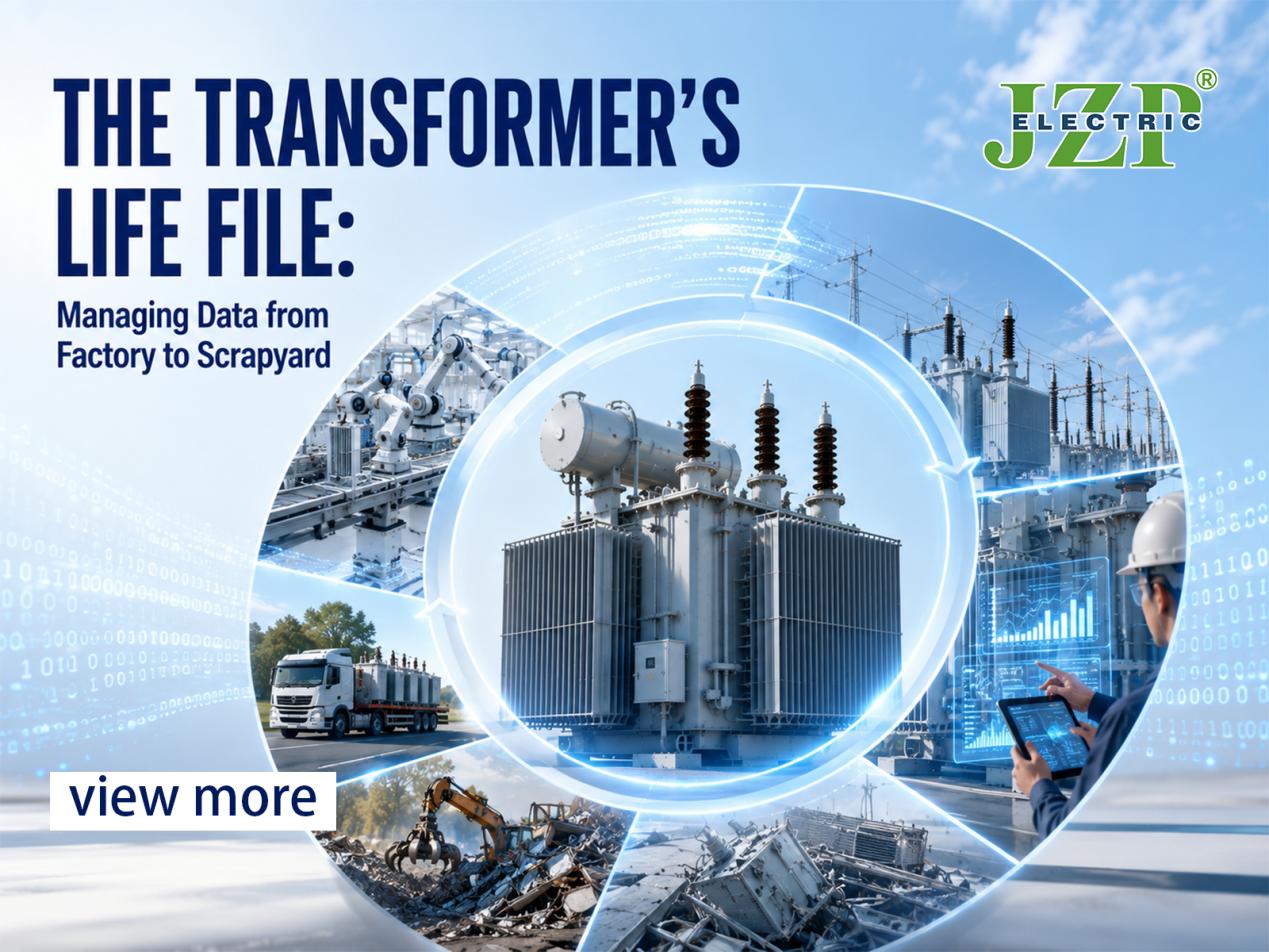
The Transformer’s Life File: Managing Data from Factory to Scrapyard
2026-05-11
Introduction
A transformer can operate for 30 to 40 years. Over that time, it accumulates a wealth of data: factory test reports, transport impact records, commissioning results, periodic oil analyses, maintenance logs, and finally, endoflife assessments. Without systematic management, this data remains scattered—useful for nothing more than individual compliance checks.
When properly curated, however, this digital archive becomes a strategic asset. It enables trendbased life extension, evidencebacked warranty claims, and informed replacement decisions. This article outlines the key data categories and management practices for a transformer’s entire lifecycle.
Part One: What Data to Collect
Factory stage. Nameplate parameters, type test reports (impedance, losses, shortcircuit withstand), routine test values (insulation resistance, turns ratio, winding resistance), and baseline dissolved gas analysis (DGA). Store these with the transformer’s unique serial number and manufacturing date.
Transport and installation. Impact recorder files (threeaxis shock and tilt measurements), arrival inspection checklists, vacuum and oil filling logs, and site acceptance test results. This data is critical for attributing future damage to shipping events versus operational wear.
Operation phase. Routine oil sample DGA, furfural and moisture data; electrical tests (insulation resistance, tan δ, partial discharge); thermal imaging uploads; tap changer operation counters; load history and throughfault records. Every measurement should include temperature and humidity at the time of test for later correction.
Maintenance and repair. Work orders, replaced components (bushings, gaskets, fans, tap changer parts), oil reclamation or replacement logs, and any internal inspection reports (core, windings, clamping).
Endoflife. Remaining life assessment using degree of polymerization (DP) or furfural trend, decommissioning reason (age, failure, capacity upgrade), and disposal or remanufacturing records.
Part Two: How to Manage the Data
Centralized digital repository. A single database or asset management system accessible to all stakeholders—operations, maintenance, and procurement. Avoid spreadsheets or isolated folders.
Standardized naming and units. Use consistent parameter names and SI units. Record test methods (e.g., IEEE 43 for insulation resistance) and correction factors (temperature, humidity) alongside raw values.
Baseline + trending. Store initial factory values as the baseline. Every subsequent measurement must be comparable: same test configuration, corrected to the same reference temperature, and recorded with date and operator ID. Software should automatically flag deviations exceeding set thresholds (e.g., DGA gas increase rate >10 ppm/week, or insulation resistance drop >30% from baseline).
Alerts and workflows. Link data to notification rules. When a parameter exceeds a caution or alarm limit, the system should trigger a work order or alert senior engineers. This transforms passive records into active risk management.
Part Three: Procurement and Management Implications
For new transformers. Specify in the purchase contract that the supplier must provide digital copies of all factory test reports, impact recorder files, and recommended baseline values for future trending (including temperature correction formulas). Require that the transformer’s nameplate includes a scannable QR code linking to its digital archive.
For existing fleet. Digitize historical records. Use modern DGA and oil quality results to backcalculate a virtual baseline. Start trending from the first complete set of reliable data.
For life extension. A transformer is a candidate for life extension when its digital record shows no severe winding deformation (FRA baseline unchanged), partial discharge activity below alarm thresholds, DP >300 (or furfural <1 ppm), and stable or improving moisture content. Without these data, any life extension decision is guesswork.
Conclusion
A transformer’s digital record is its medical chart. Regular measurements lose value without a baseline, and scattered files offer no warning of emerging trends. By systematically collecting factory, transport, operational, and maintenance data in a centralized system—and by enforcing trending rules and alerts—asset managers can extend transformer life, reduce unplanned outages, and make replacement decisions with confidence. The cost of good data management is negligible compared to the cost of a single catastrophic failure.