
 +86 18068001229



0102030405
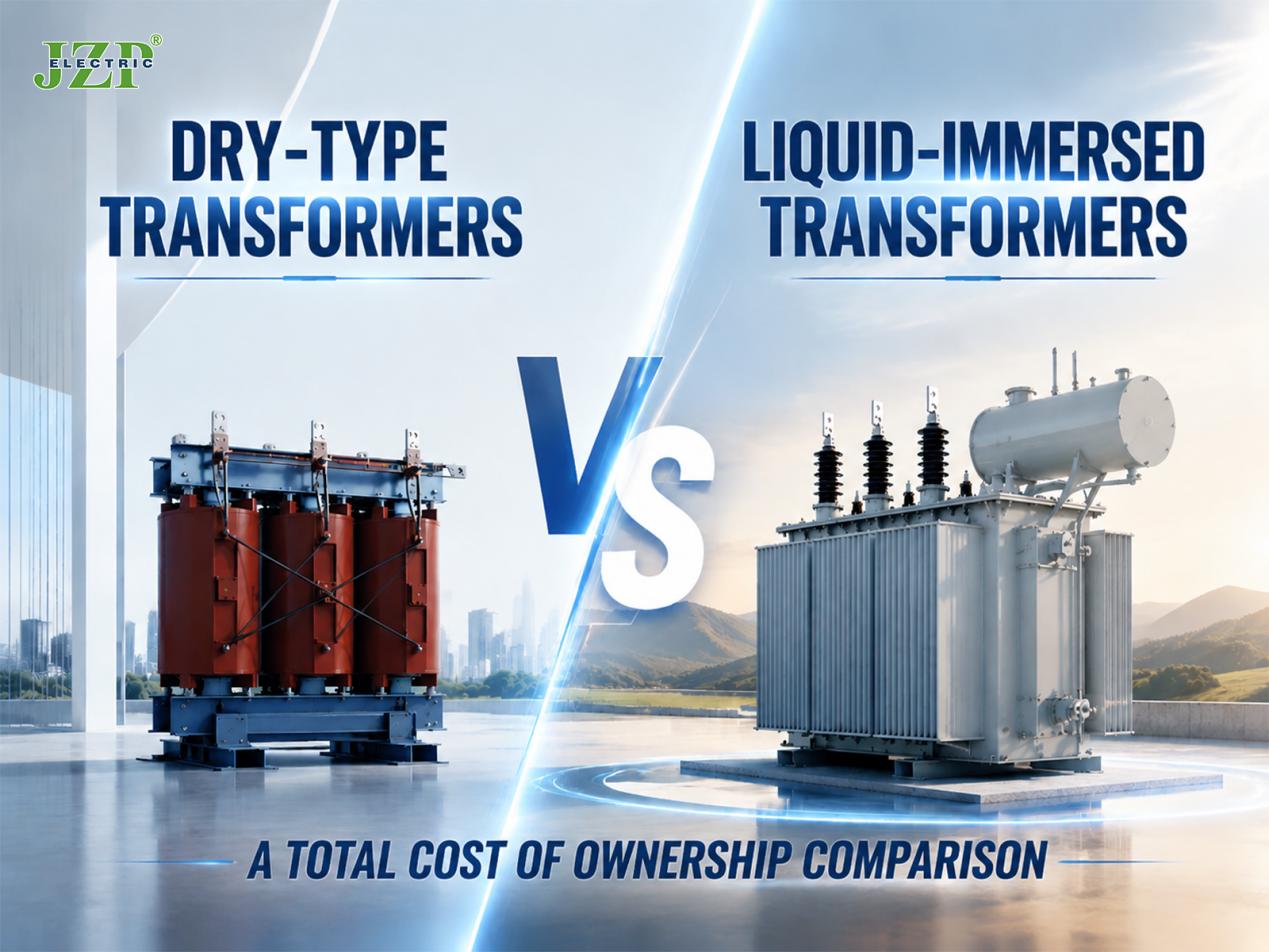
Dry-Type vs. Liquid-Immersed Transformers: A Total Cost of Ownership Comparison
2026-05-13
Introduction
When selecting a distribution or power transformer, the choice between drytype and liquidimmersed (typically oilfilled) is often driven by first cost and installation environment. However, initial purchase price is only a fraction of the total cost of ownership (TCO). Operating losses, maintenance, fire safety systems, and endoflife disposal add substantial costs over a 30–40 year service life.
This article compares the two technologies across all relevant cost categories, providing procurement professionals with a framework for making economically sound decisions that go beyond the upfront price tag.
Part One: Initial Capital Cost
Liquidimmersed transformers have a clear advantage in first cost. For the same rating and efficiency class, an oilfilled unit is typically 20–35 percent less expensive than a drytype counterpart. The reasons are mature manufacturing processes, lower material cost (mineral oil is cheaper than epoxy resin and hightemperature insulation), and broader market competition.
Drytype transformers require more expensive insulation systems (epoxyencapsulated windings or Nomex® paper) and larger enclosures for equivalent cooling. Their cost premium has narrowed in recent years due to improved manufacturing but remains significant.
TCO impact: Lower initial cost favours oilfilled units, but this advantage can be eroded by higher operating and installation costs over time.
Part Two: Efficiency and Losses
Losses are the largest operational expense over a transformer’s life. A 1,000 kVA transformer with 1 kW higher noload loss wastes approximately 8,760 kWh per year – at 0.10/kWh,0.10/kWh,876 annually, or $26,000 over 30 years (undiscounted). Load losses add more under typical loading patterns.
Modern drytype transformers can achieve efficiencies comparable to oilfilled units, especially in lower voltage classes. However, for ratings above 5 MVA, oilfilled designs generally have lower losses because of better cooling and more mature core optimization. Amorphous metal cores – available in both types – dramatically reduce noload losses but are more common in oilfilled Distribution Transformers due to manufacturing economics.
TCO impact: Slightly higher losses in drytype designs (especially at higher ratings) can accumulate into significant cost differences. Specify efficiency class carefully for both technologies.
Part Three: Installation and Housing
Liquidfilled transformers need oil containment (110% of oil volume), firerated vaults for indoor use, and spill plans. Drytype can be placed directly indoors without special vaults or containment. For indoor or spaceconstrained sites, drytype often has lower installed cost despite higher equipment price.
Part Four: Maintenance and Operational Costs
Oilfilled units require periodic oil sampling (DGA, moisture), filtration every 10–15 years, and breather/gasket monitoring. Drytype needs only occasional cleaning of windings and fans. Drytype offers lower longterm maintenance.
Part Five: Fire Safety and Environmental Risk
Oilfilled transformers are flammable. Indoor installations require expensive fire suppression systems and higher insurance premiums. Drytype is nonflammable and poses no leak hazard. For installations near people or valuable equipment, drytype’s risk reduction often justifies its higher first cost.
Part Six: EndofLife Disposal
Liquidfilled transformers at endoflife require draining and proper disposal of mineral oil (hazardous waste in many regions). Tanks and cores are recyclable, but oil disposal adds cost. Units containing PCB oils (pre1980s) incur very high disposal fees.
Drytype transformers contain no liquid. Copper and steel are easily recycled; epoxy resin can be crushed and used as filler or sent to cement kilns. Disposal costs are generally lower.
TCO impact: Drytype has lower endoflife costs.
Conclusion
For outdoor substations in nonsensitive areas, liquidimmersed units usually offer lower TCO due to lower first cost and slightly better efficiency. For indoor, spaceconstrained, or environmentally sensitive sites, drytype typically provides lower TCO by eliminating fire vaults, oil containment, and ongoing oil maintenance. Calculate TCO with realistic load profiles, local construction costs, and maintenance labour rates. The cheapest transformer at purchase is rarely the cheapest over its lifetime.