
 +86 18068001229

0102030405
Oil-Immersed Transformer Winding: Technical Insights and Design Features
2025-08-20
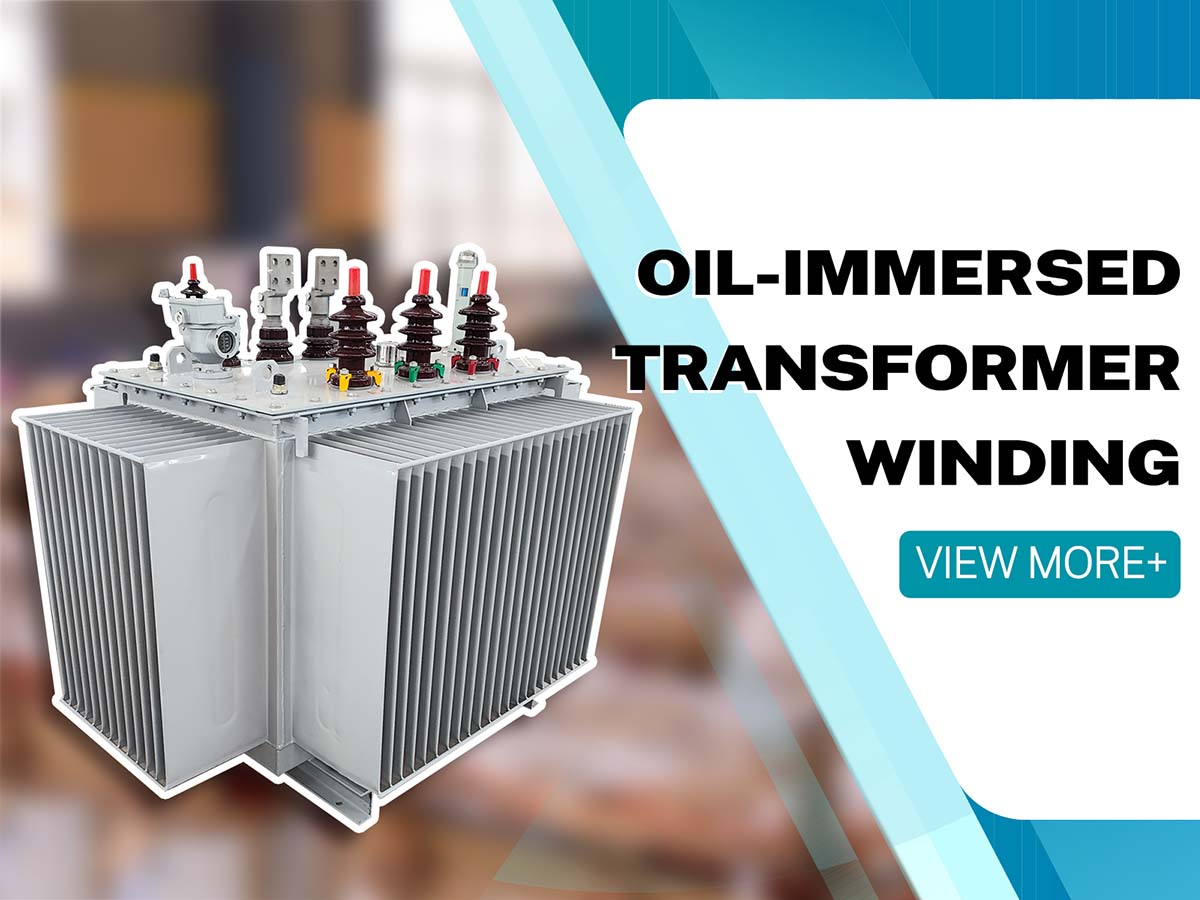
Oil-Immersed Transformer windings are critical components in power distribution systems, designed to efficiently transfer electrical energy while ensuring reliability and durability. Below is a detailed analysis of their structure, materials, and operational principles, synthesized from industry standards and technical specifications.
Oil immersed transformer top temperature is prohibited to exceed 95 ° C, generally prohibited to exceed 85 ° C, the general transformer winding selection of class A insulation layer material, the maximum allowable temperature of insulation material is 95~105 ° C, in China's transformer heating specifications are based on the working temperature of 40 ° C as the standard, winding of the average temperature of gas included in 65 ° C, The temperature rise of the top oil to the gas is accurately positioned at 55 ° C, so the winding containing the transformer core is included in the temperature rise of the oil at 10 ° C.
If the top temperature of the transformer is 85 ° C, the winding temperature is 95 ° C; If the top temperature is 95 ° C, the winding temperature has reached 105 ° C, which has reached the maximum allowable temperature of the winding insulation layer material. Too high temperature will accelerate the aging of insulating layer materials, accelerate transformer oil deterioration, harm the service life of Distribution Transformers, and even lead to safety accidents.
Strong oil circulation system air-cooled transformer, top temperature 75℃ warming 35℃; Oil natural circulation system, overtemperature protection, air-cooled transformer, the top temperature is generally not suitable for often exceed 85 ° C, the high can not exceed 95 ° C heating can not exceed 55 ° C, if found in the operation of a limit value exceeds the requirements, should immediately report production scheduling, the use of load limit countermeasures.
1. Definition and Core Function
Oil-immersed transformer windings consist of copper or aluminum coils wound around a laminated silicon steel core. These windings are fully submerged in insulating oil, which serves dual purposes: electrical insulation and thermal management. The windings transform high-voltage input into lower-voltage output (or vice versa) via electromagnetic induction, enabling safe power transmission across grids.
2. Material Composition
Conductive Material:
Copper: Predominantly used for high-voltage windings due to its superior conductivity and mechanical strength. Low-voltage windings (≤500 kVA) often adopt a double-layer cylindrical structure, while larger capacities (≥630 kVA) use double-helix or quadruple-helix configurations to optimize current distribution
Aluminum: Occasionally employed for cost-sensitive applications, though less efficient than copper.
Insulation:
High-resistance materials (e.g., epoxy resins, cellulose-based paper) isolate windings from the core and each other.
Multi-layer insulation prevents short circuits under thermal stress or mechanical deformation.
3. Structural Design
Winding Arrangement:
Concentric (Cylindrical) Winding: Common in three-phase transformers, where low-voltage windings are placed inside high-voltage windings to minimize leakage flux.
Layer-Wound (Helical) Winding: Used for high-current applications, featuring interleaved layers to reduce eddy current losses.
Cooling Integration:
Windings incorporate oil ducts to channel heat dissipation via natural or forced convection.
Corrugated oil tanks replace traditional conservators, allowing thermal expansion of oil while maintaining a sealed environment.
4. Performance Optimization
Low Loss Design:
Amorphous Alloy Cores: Reduce hysteresis and eddy current losses (e.g., S11-M series transformers achieve 30% lower losses than older models)
Dyn11 Connection Group: Minimizes harmonic distortion and improves power quality by offsetting third-harmonic currents
Short-Circuit Resistance:
Reinforced winding clamps and spiral winding techniques enhance mechanical stability during fault conditions.
Silica gel breathers and Buchholz relays monitor moisture and oil flow anomalies
5. Application and Maintenance
Deployment Scenarios:
Industrial substations, urban power grids, and renewable energy systems (e.g., wind farms).
Rated capacities range from 50 kVA to 25,000 kVA, with voltages up to 35 kV
Maintenance Practices:
Regular oil sampling and dissolved gas analysis (DGA) to detect insulation degradation.
Thermal imaging to identify localized hotspots in windings.
6. Innovations in Winding Technology
Vacuum Impregnation: Eliminates air pockets during manufacturing, improving insulation integrity
Smart Monitoring: IoT-enabled sensors track winding temperature and load dynamics in real time.