
 +86 18068001229




0102030405
How Healthy Is Your Transformer? Understanding Preventive Testing Cycles and Standards
2026-04-10
Introduction
Transformers do not fail without warning. They send signals through oil chemistry, electrical measurements, and thermal behavior long before a catastrophic event. Preventive testing is the systematic practice of measuring transformer health at regular intervals, catching problems early. For asset managers and procurement professionals, understanding testing cycles and standards is essential for maintaining reliability.
Part One: Why Preventive Testing Matters
Regular testing accomplishes three goals: detects developing faults before they cause damage, tracks degradation trends to predict remaining life, and prioritizes maintenance based on actual condition. Industry data shows that condition-based maintenance can reduce unplanned outages by over 40 percent while cutting costs by more than 30 percent.
Part Two: Standard Testing Intervals
Routine Tests (Annual or Biennial). For most Distribution Transformers: insulation resistance, turns ratio, winding resistance, oil sampling for DGA and moisture, visual inspection.
Extended Tests (Every 3-6 Years). For larger or critical units: dielectric dissipation factor, partial discharge measurement, frequency response analysis (FRA), comprehensive oil analysis including furanic compounds.
Major Overhaul Tests (Every 10-15 Years). For transformers showing degradation: internal inspection, core insulation resistance, tap changer contact condition, gasket replacement.
Adjust intervals based on trends. Stable results may extend intervals; worsening parameters require shorter cycles.
Part Three: Key Test Parameters
Insulation Resistance. Measures winding-to-ground and winding-to-winding insulation. Trending matters more than absolute values. (Standards: IEEE 43, IEC 60076-3)
Turns Ratio. Verifies voltage ratio matches nameplate. Deviation >0.5% may indicate shorted turns. (IEEE C57.12.90, IEC 60076-1)
Winding Resistance. Phase unbalance >2% suggests loose connections or damage. (IEEE C57.12.90, IEC 60076-1)
Dielectric Dissipation Factor (Tan δ). Rising tan δ indicates moisture, contamination, or aging. (IEEE C57.12.90, IEC 60247)
Dissolved Gas Analysis (DGA). Hydrogen for partial discharge, acetylene for arcing, ethylene for thermal faults. Sudden gas increases demand investigation. (IEEE C57.104, IEC 60599)
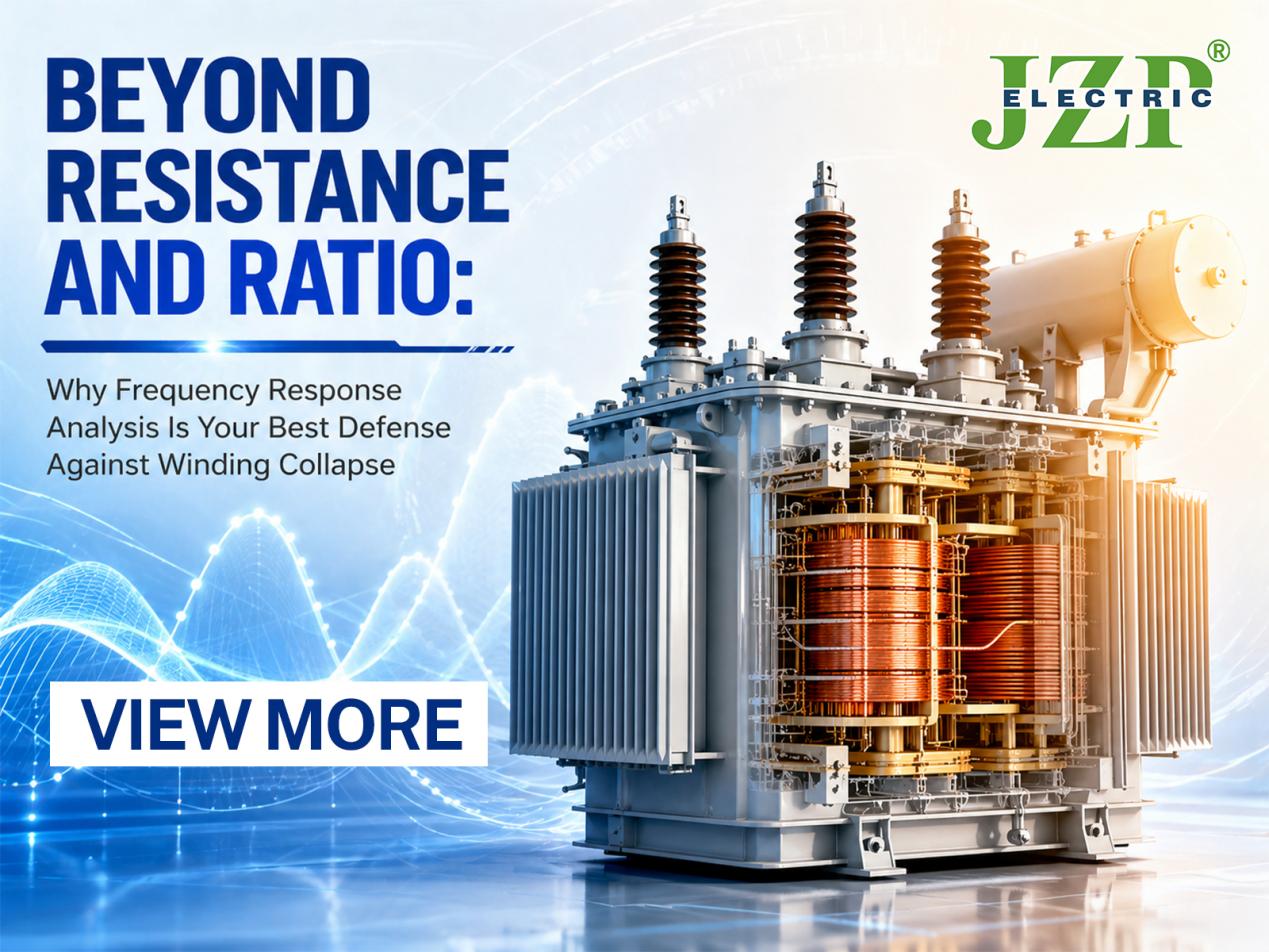
Frequency Response Analysis (FRA). Detects winding deformation. Baseline fingerprint required. (IEEE C57.149, IEC 60076-18)
Partial Discharge (PD). Rising PD activity indicates progressive insulation deterioration. (IEC 60270)
Part Four: Procurement Implications
Specify Testing Requirements. Include intervals and acceptance criteria in technical specifications. Require baseline values from factory tests.
Request Test Records. For used or remanufactured transformers, request complete test history. Evaluate trends, not single values.
Plan for Testing Access. Ensure transformers have sampling valves, test terminals, and access for thermal imaging.
Budget for Testing. Testing costs are a fraction of unplanned failure costs.
Conclusion
Preventive testing transforms the transformer from a black box into a known quantity. Regular measurements reveal true condition. By establishing appropriate cycles and adhering to international standards, asset managers can detect problems early and extend transformer life. The question is not whether to test, but how thoroughly.