Leave Your Message
0%

Hey, have you heard about the upcoming 2026 Canton Fair? It's gonna be a pretty big deal for folks in the industry since experts from all over will be gathering to chat about power solutions — especially the 50kva 80kva Transformer. John Smith, who’s a really well-known electrical engineer at Power Solutions Inc., puts it simply: “Knowing the ins and outs of transformer size differences is key when you're trying to make sure energy is used efficiently.” His insights really help clarify how these different transformers serve different needs.

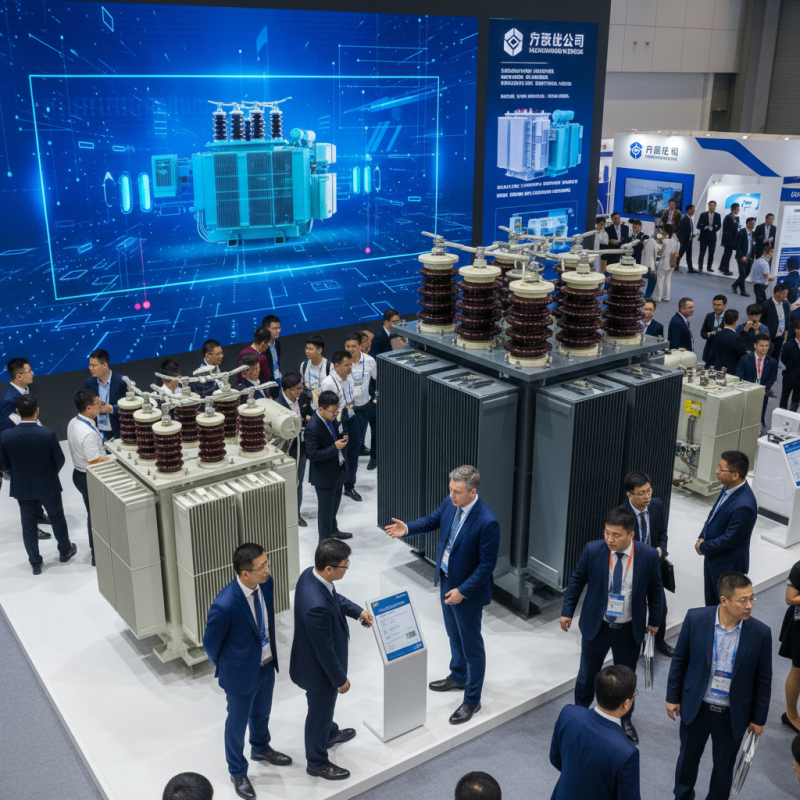
When you compare a 50kva Transformer to an 80kva one, the differences are pretty significant. Usually, a 50kva is good for smaller setups, while the 80kva can handle bigger loads. That difference isn’t just about size — it impacts how efficient they are and how much they cost. Luckily, at the fair, there are some cool AI-powered tools that help visitors better understand these differences, making it easier to navigate the huge exhibition space.

Of course, with so many buyers and suppliers chatting away, it’s easy to overlook some key specs. It’s super important to look at how each transformer performs at different load levels, because making a wrong call here can cause all sorts of issues. The goal at this year's Canton Fair? To close those knowledge gaps and help everyone make smarter choices when it comes to transformer applications.
What is the Difference Between 50kva and 80kva Transformers at Canton Fair 2026?

Understanding Transformer Ratings: An Overview

When exploring transformer ratings, understanding the difference between 50kVA and 80kVA transformers is key. The kVA rating indicates the apparent power a transformer can handle. A 50kVA transformer provides less power compared to an 80kVA one. This is crucial for applications needing specific power loads.

In practical terms, an 80kva Transformer can support more equipment than a 50kVA model. It’s vital to consider the requirements of your equipment. Using a transformer with insufficient power can lead to overheating. This may cause failures or damage.

Tips: Always calculate your total power needs before choosing a transformer. Overrated transformers can also lead to inefficiencies and increased costs. Don't forget to assess your future expansion needs. Power requirements may change over time. Choose wisely to avoid frequent upgrades.

Defining 50kVA and 80kVA Transformers

When exploring the world of transformers, it's essential to understand the differences between 50kVA and 80kVA models. A transformer rated at 50kVA is suitable for smaller applications. It typically serves residential needs or small commercial setups. In contrast, the 80kVA transformer supports more significant loads. This difference can impact the efficiency of electrical supply in various settings.

The 80kVA transformer is ideal for industries that require higher power. This includes manufacturing plants and larger commercial spaces. These transformers can handle increased demands without the risk of overheating. However, with greater capacity comes the need for more careful planning. Some may overlook the importance of proper installation and maintenance. A poorly installed 80kVA transformer can lead to inefficiencies and potential hazards.

When attending events like the Canton Fair 2026, understanding these nuances can guide purchasing decisions. Many buyers may not prioritize this information. Each transformer has specific features tailored to different applications. Learning about the specifications could prevent costly mistakes. Always consider your requirements and power demands before committing to a choice.

Key Specifications and Features of Transformers

When comparing 50kVA and 80kVA transformers, key specifications vary significantly. A 50kVA transformer is often compact, suited for smaller applications. It typically handles loads around 50 kilovolt-amperes. This makes it ideal for residential buildings or small industrial setups. In contrast, the 80kVA transformer has a higher capacity. It supports larger electrical loads, suitable for medium-sized businesses. The difference in power handling is essential for selecting the right transformer.

Next, we must consider efficiency and heat dissipation. Both transformers need adequate cooling systems. Improper cooling can lead to performance issues. For instance, the 50kVA may run cooler due to lower output, while the 80kVA may require enhanced cooling technology to avoid overheating. Core material and design can also impact efficiency. The choice of materials often reflects initial costs versus long-term savings.

When at the Canton Fair, look for specifications that detail these features. Understanding how these differences impact your needs greatly helps in making a decision. Inspecting transformers closely reveals subtle differences that can affect functionality. Engaging with manufacturers might expose more complex specifications, making it crucial to ask the right questions.

Applications of 50kVA and 80kVA Transformers

Transformers play a crucial role in various applications. In industries, both 50kVA and 80kVA transformers offer distinct advantages. The 50kVA transformer suits smaller setups. It is ideal for light machinery or lighting systems. Often used in commercial buildings, it provides sufficient power for basic needs.

On the other hand, 80kVA transformers cater to more demanding applications. They serve larger operations, such as manufacturing or heavy equipment. This transformer type can handle higher loads effectively. It ensures a stable power supply for various industrial processes.

However, the choice between these two may not always be straightforward. Users must assess their specific requirements. An undersized transformer can lead to inefficiencies. Overloading can cause overheating. Therefore, careful consideration is necessary when selecting a transformer for your needs. Balancing efficiency and load capacity should always be a priority.

This bar chart illustrates the differences between 50kVA and 80kVA transformers in terms of voltage level, load capacity, efficiency, weight, and cost. The data reflects average specifications commonly observed in the industry.

Efficiency and Performance Comparisons

What is the Difference Between 50kva and 80kva Transformers at Canton Fair 2026?

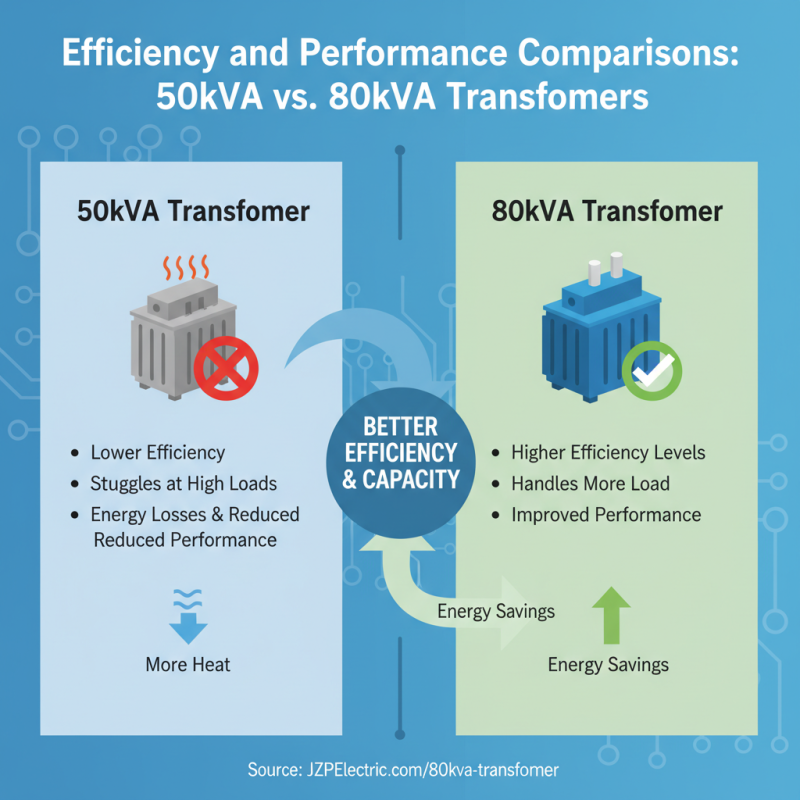
When comparing 50kVA and 80kva Transformers, efficiency is key. The 80kVA transformer generally provides higher efficiency levels. It can handle more load without overheating. In contrast, the 50kVA transformer might struggle at high loads. This can lead to energy losses and reduced performance.

Performance differences also come into play. The 80kVA transformer is built for heavier duty applications. It often has better voltage regulation. However, using an oversized transformer can lead to inefficiencies too. A balance must be struck depending on needs. It’s not always about power. Sometimes, smaller transformers fit better in tight spaces.

Users should be aware of installation challenges. A larger transformer like the 80kVA Transformer requires more space. It needs proper ventilation to prevent overheating. Inadequate airflow can impact its lifespan. Taking these factors into account can lead to better decision making. Efficiency isn't just about numbers; it's about real-world applications.

Choosing the Right Transformer for Your Needs

When choosing between 50kva and 80kva transformers, it’s crucial to assess your specific needs. Consider the power requirements of your equipment. A 50kva transformer may suffice for small businesses. However, an 80kva transformer offers more capacity for larger operations. Understand the future growth of your electrical load as well.

Tips: Always calculate maximum loads. This helps prevent overloads. Underestimating needs often leads to costly adjustments later.

Evaluate the environment where the transformer will be installed. 50kva transformers usually fit in tighter spaces, while 80kva units require more room. Noise levels can also differ. Consider sound mitigation if your setup is near residences or offices.

Tips: Think about maintenance needs. A larger transformer might require more effort for upkeep. It's important not to overlook this aspect. A neglected unit can lead to issues down the road. Ensure you have the resources for ongoing maintenance.

In summary, it’s vital to choose carefully between these options. Balancing capacity, space, and maintenance will lead to better decision-making for your electrical needs.

Future Trends in Transformer Technology at Canton Fair 2026

At the Canton Fair 2026, the spotlight is on future trends in transformer technology. The demand for efficiency and sustainability is driving innovation. Manufacturers are exploring advanced materials to enhance performance. This is vital for both 50kva Transformers and larger models, like the 80kva transformers. Innovations aim to reduce losses and improve energy efficiency.

The integration of smart technology is another trend. Sensors can monitor performance in real-time. This helps in predicting failures before they occur. However, not all developments are perfect. Some manufacturers struggle to balance cost and technology. This creates a gap in accessible options for smaller businesses. As the industry evolves, the challenge remains to make innovations affordable.

Another area of interest is the shift towards renewable energy sources. Transformers play a crucial role in integrating solar and wind energy. There is a push for transformers that can handle fluctuating loads efficiently. While many advancements are promising, the journey is still complex. The road to fully optimized and efficient transformer solutions, particularly for models like the 50kva transformer, is one that requires collaboration and continuous improvement.

What is the Difference Between 50kVA and 80kVA Transformers at Canton Fair 2026? - Future Trends in Transformer Technology at Canton Fair 2026

Attribute 50kVA Transformer 80kVA Transformer
Power Rating 50kVA 80kVA
Typical Applications Small industrial loads, commercial buildings Larger industrial loads, manufacturing facilities
Efficiency 94%-95% 95%-96%
Size (Dimensions) Compact (e.g., 1200mm x 800mm x 800mm) Larger (e.g., 1400mm x 900mm x 900mm)
Weight Approx. 400 kg Approx. 600 kg
Cooling Method Dry type or Oil-immersed Dry type or Oil-immersed
Pricing Range $2,500 - $3,500 $3,500 - $5,000

FAQS

: What is the main difference between 50kV

and 80kVA transformers?

When should I use a 50kVA transformer?

Use a 50kVA transformer for residential needs or small commercial setups that require minimal power.

What applications require an 80kVA transformer?

An 80kVA transformer is ideal for industries like manufacturing or larger commercial spaces needing higher power.

How do cooling systems affect transformer performance?

Adequate cooling is crucial. Insufficient cooling can lead to overheating, affecting performance and efficiency.

What happens if a transformer is undersized?

An undersized transformer can lead to inefficiencies and may overheat under heavy loads, posing risks.

How important is installation and maintenance for transformers?

Proper installation and regular maintenance are essential to ensure safety and optimal performance of transformers.

Can transformer specifications impact purchasing decisions?

Yes, understanding specifications helps ensure the right choice, preventing costly mistakes in matching needs.

Why is it crucial to assess specific requirements?

Assessing needs ensures the right transformer is selected. Balancing efficiency and load capacity is crucial.

What role do core materials play in a transformer's performance?

Core materials affect efficiency and costs. Choosing the right material can lead to long-term savings.

How often should transformers be inspected?

Regular inspections are essential to identify subtle issues that can affect functionality and safety over time.

Conclusion

The article "What is the Difference Between 50kVA and 80kVA Transformers at Canton Fair 2026?" provides a comprehensive overview of transformer ratings with a focus on understanding the distinctions between 50kVA and 80kVA transformers. It outlines the key specifications and features of these transformers, helping readers grasp their applications in various sectors. The efficiency and performance comparisons are crucial for stakeholders to evaluate which transformer best suits their operational needs.

Additionally, the article emphasizes the importance of choosing the right transformer based on specific requirements and highlights future trends in transformer technology that will be showcased at the Canton Fair 2026. Ultimately, the insights gained from comparing the 50kVA and 80kVA transformers arm potential buyers with the knowledge essential for making informed decisions in their electrical systems.
Emma

Emma

Emma is a professional marketer at JEZOU POWER, a leading designer, manufacturer, and installer of power system solutions worldwide since its inception in 1989. With an expansive facility covering 200,000 square meters, JEZOU POWER is recognized for its advanced design concepts and refined......
Previous Why Choose Pad Mounted Transformers at the 2026 Canton Fair?