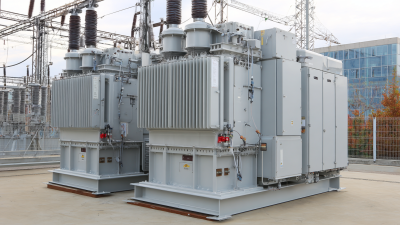
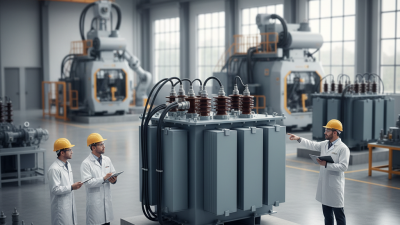
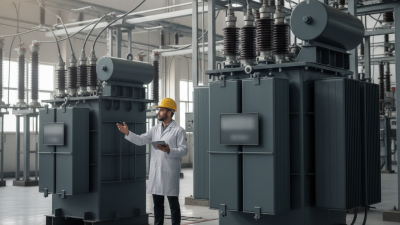
So, you're trying to decide between a 50kva and an 80kva transformer? Honestly, understanding what you really need is super important here. Both options come with their own perks, but picking the right one can make a big difference when it comes to efficiency and cost. Usually, a 50kva Transformer works just fine for smaller setups—think homes or light commercial stuff. It gives you enough power without breaking the bank upfront. On the flip side, if you’re dealing with bigger demands—like industrial setups or high-capacity residential needs—then an 80kva might be the better pick.
Making the call between these two isn’t just about numbers. You’ve gotta think about your current load, potential for growth down the line, and what your budget looks like. Every situation’s a little different, and sometimes, it’s not obvious which one's best right off the bat. Using a transformer that's not quite right can lead to all sorts of issues—inefficiencies, higher running costs, or even damaging your equipment. So, it’s worth thinking about how your power needs might change over time.
In the end, choosing the right transformer is all about balancing what you need now with where you see yourself in the future. Going for a 50kva 80kva Transformer should ideally match both your current demands and your growth plans. That way, you’re set up for reliable and efficient operation in the long run. Of course, it’s a smart move to chat with professionals and do your homework—better safe than sorry, right?
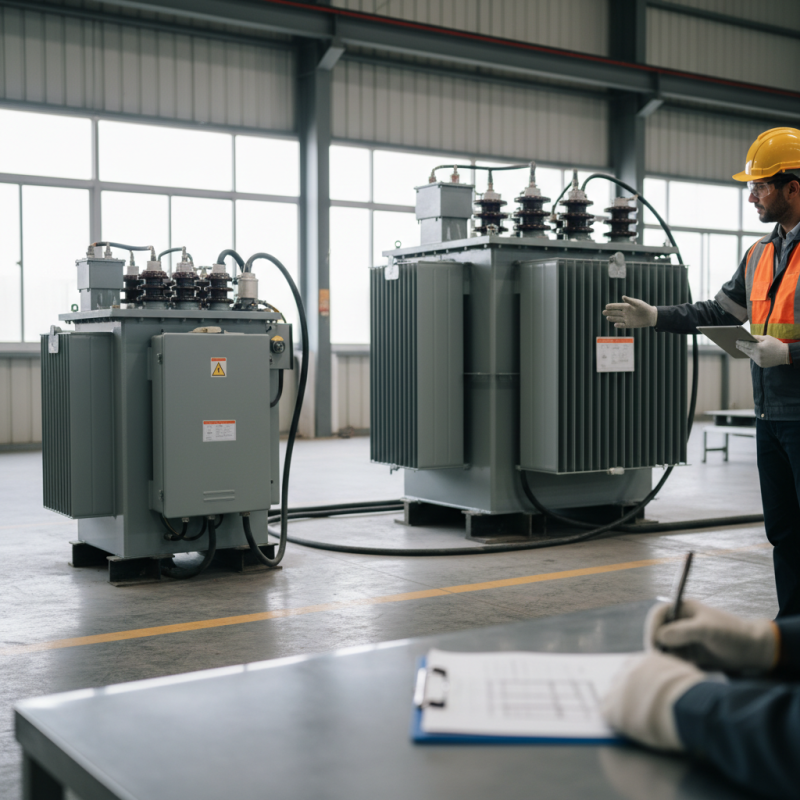
Understanding Transformer Ratings: 50kVA vs. 80kVA
When selecting a transformer, understanding ratings like 50kVA and 80kVA is crucial. The kVA rating indicates how much power a transformer can handle. A 50kVA transformer is suitable for smaller applications, while an 80kVA transformer caters to larger setups. It is important to assess your power needs before choosing.
Consider the load. An 80kVA transformer provides more capacity, allowing for future expansion. This can be beneficial if you plan to add equipment later. However, a larger transformer may lead to unnecessary costs if your needs are minimal. It’s key to balance cost and capacity.
Installation and operational efficiency are also vital. With a Transformer 80kva, you may face increased installation complexity. Power loss and temperature rise should also be evaluated. If your location has fluctuating demands, investing in a higher-rated transformer could provide stability. An ideal choice harmonizes your immediate power needs and potential growth.
Applications of 50kVA Transformers: When to Choose
When selecting a transformer, understanding its applications is crucial. A 50kVA transformer is ideal for smaller operations. It's suitable for light industrial and commercial environments. These transformers effectively power equipment like office buildings, small factories, and retail shops. They are designed to handle a lower load while maintaining efficiency.
On the other hand, an 80kva Transformer serves larger needs. If your operations require more power, this transformer might be the right choice. It supports heavier machinery and more extensive electrical systems. Factories with multiple production lines or warehouses with extensive lighting often choose the 80kVA option. It can manage increased demand without sacrificing performance.
However, consider your future expansions. Opting for an 80kVA transformer now may save you from later upsizing. But if your needs remain stable, the 50kVA option suffices. Assess your current power load and future requirements carefully. The right choice balances current use and potential growth effectively.
How to Choose Between 50kva and 80kva Transformer for Your Needs?
| Transformer Rating | Typical Applications | Advantages | Disadvantages | Recommended Use Case |
| 50kVA | Small to medium industrial applications, commercial buildings, lighting systems | Compact size, lower initial cost, energy efficient for low loads | Limited capacity for large loads, may require balancing for uneven loads | Ideal for small factories, workshops, and residential buildings |
| 80kVA | Larger industrial installations, complex machinery, HVAC systems | Higher capacity for larger loads, can handle fluctuating demands | Higher initial cost, larger physical size, may consume more energy at low loads | Best suited for medium to large factories and commercial facilities with high power requirements |
Applications of 80kVA Transformers: Ideal Scenarios
When considering an 80kVA transformer, it's essential to recognize its applications. This rating is often ideal for commercial buildings, factories, and larger residential complexes. An 80kVA transformer can effectively handle high electrical demands. It ensures reliable Power Distribution and minimizes the risk of outages.
Tips for selecting the right transformer include assessing your current and future energy needs. Think about peak load requirements. For many businesses, quick adaptability to load changes is crucial. An 80kVA transformer may perform better in high-demand settings.
In contrast, a Transformer 50kva suits smaller operations or residential applications. Reflect on efficiency in both scenarios. While an 80kVA transformer offers more power, it might be unnecessary for less demanding situations. Make sure to evaluate potential growth; oversizing can lead to inefficiencies. It's vital to find a balance that meets your needs without unnecessary excess.
Factors to Consider When Selecting Transformer Size
Choosing the right transformer size is crucial for efficiency. When weighing the options between a 50kVA and an 80kVA transformer, several key factors must be considered. Load requirements should be the top priority. According to industry reports, a transformer should operate at around 80% of its capacity for optimal performance. If your business anticipates growth or increased equipment usage, an 80kVA transformer might be a safer choice.
Next, consider the load type. For continuous loads, a transformer capable of handling higher capacities is essential. Data indicates that 40% of transformer failures stem from overloading. Thus, selecting a transformer that accommodates additional peak loads can prevent possible downtimes. Assessing future expansion plans is also pertinent, as an oversized transformer could lead to inefficiencies.
Additionally, understanding installation requirements and spatial constraints is vital. A larger transformer may demand more space and require a robust cooling system. Practical experience shows that businesses often underestimate the implications of these factors, leading to potential operational issues. Balancing immediate needs with long-term goals is important, but sometimes, that balance can be hard to achieve. Consider consulting with an expert to clarify the best decision for your specific situation.
Cost Analysis: 50kVA vs. 80kVA Transformers
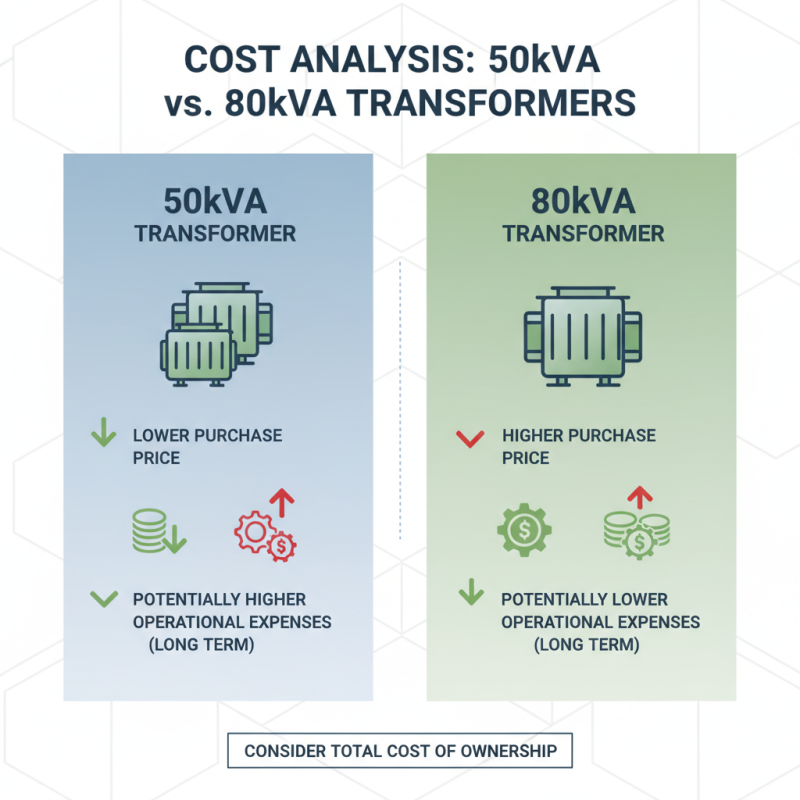
When considering the cost of 50kVA versus 80kVA transformers, several factors come into play. The purchase price typically varies significantly. A 50kVA transformer generally costs less than an 80kVA unit. However, lower upfront costs may lead to higher operational expenses in the long run.
Installation costs can also differ. Larger transformers often require more complex setups and higher labor costs. Additionally, remember that ongoing maintenance is crucial. Higher capacity transformers may need more frequent checks and repairs due to increased load. This could lead to long-term cost implications.
**Tips for Cost Efficiency:**
1. Evaluate your current and future power needs before selecting a transformer size. This can save money in the long term.
2. Consider energy efficiency ratings. Higher efficiency can lead to significant savings on electricity bills.
3. Factor in installation complexity. Sometimes, a more expensive transformer can be cheaper overall due to easier setup.
Choosing the right transformer isn’t solely about initial costs. It also involves ongoing financial implications that can impact your budget for years to come. Weigh these factors carefully.
Efficiency and Performance Differences Between Sizes
When selecting between a 50kVA and an 80kVA transformer, it's essential to consider efficiency and performance. A 50kVA transformer is often suitable for smaller applications, providing enough capacity for localized power requirements. However, if your operations demand higher loads, the 80kVA option provides added headroom. This expansion capacity allows for future growth, ensuring your transformer can handle increasing demands without overheating or reducing efficiency.
Efficiency in transformers refers to their ability to convert electrical energy without significant losses. Generally, larger transformers exhibit enhanced efficiency due to their design. They can operate at lower core losses relative to their size. However, this can come with a trade-off; the initial cost for an 80kVA transformer is higher. It's crucial to assess your current needs and potential growth. If you find yourself often operating at or near the limit of a 50kVA transformer, switching to an 80kVA might be a wise investment, albeit one that requires careful budgeting.
Performance can vary based on application. For residential or light commercial needs, a 50kVA transformer might suffice. However, industrial settings often necessitate larger units. Keep in mind that a larger transformer does not automatically mean better performance. The context of usage—load types, duration, and peak demands—plays a significant role. Therefore, it’s important to evaluate your specific use case before making a decision.
Future Expansion Needs: Aligning Transformer Capacity with Growth
When considering the future expansion needs of your business, it’s essential to align your transformer capacity with growth plans. A 50kva Transformer might suffice for current operations, but adding more machinery or increasing electrical loads could necessitate a larger capacity. Predicting your future needs is challenging. It’s easy to underestimate the power required as you expand.
A robust understanding of your energy consumption patterns is crucial. If you plan to scale up your production or add new services in the coming years, an 80kva transformer could provide that extra buffer. Choosing a 50kva transformer may seem cost-effective initially, but it may lead to costly upgrades later on. This potential inconvenience warrants a careful assessment.
Reevaluating your growth ambitions regularly can help avoid pitfalls. Flexible systems can adapt to rising demands without disruption. Aim for a balance between present requirements and future aspirations. It’s smart to think ahead, yet not every projected growth may come to fruition. Therefore, investing in an 80kva transformer may offer peace of mind, as it can accommodate changes in your operations. Ultimately, the right choice should reflect both current and anticipated needs, ensuring reliability as your business grows.
Comprehensive Guide to Choosing 69kV 4200kVA and 5250kVA 3 Phase Power Transformers for Industrial Applications
When selecting a 69kV 4200kVA or 5250kVA three-phase power transformer for industrial applications, it is vital to consider the primary and secondary voltage ratings that best suit your operational requirements. The industry offers a range of primary voltage ratings, including 110kV, 115kV, and 121kV, which provide flexibility for different industrial settings. On the secondary side, voltage configurations such as 11kV, 10.5kV, 6.6kV, and even 6.3kV are available, allowing for efficient compatibility with various equipment and machinery.
Equally important is the high voltage tap range, typically around ±8×1.25%. This feature enables fine-tuning of output voltage, accommodating fluctuating load conditions and ensuring consistent performance. Many transformers utilize a YNd11 connection type, known for its effective phase displacement and reduced harmonics, enhancing the overall efficiency of the power system. The choice between an Oil-Immersed Transformer or a substation transformer is significant too; oil-immersed models are renowned for their robust thermal management and reliability.
According to industry analysis, these parameters significantly impact energy efficiency and operational costs. A well-selected transformer can lead to improved performance, reduced downtime, and long-term reliability, making the initial investment worthwhile. Moreover, proper sizing and specification of these transformers are crucial, as undersized units can lead to overheating and diminished lifespan, while oversized units may incur unnecessary losses. Therefore, meticulous assessment based on operational needs and environment is essential for optimal performance in industrial applications.
FAQS
Larger transformers often require complex setups, leading to higher installation labor costs.
Higher capacity transformers may need more frequent checks, leading to potential long-term expenses.
Evaluate both current and future power needs to make an informed decision and save money later.
Higher efficiency can lead to significant savings on electricity bills, impacting overall costs.
Consider your growth plans; underestimating future power needs can necessitate costly upgrades.
Regularly reassessing your growth ambitions can help avoid costly mistakes in transformer capacity.
Yes, a 50kVA transformer might seem cheaper but can result in expensive upgrades if loads increase.
While it provides peace of mind, investing in an 80kVA transformer may not be needed if growth doesn’t happen.
Aim for systems that can adapt to rising demands without disrupting operations, reflecting both current and anticipated needs.
Conclusion
When choosing between a 50kVA and an 80kVA transformer, it's essential to understand the differences in their ratings and applications. The 50kVA transformer is typically suitable for smaller operations or specific applications where lower power demand is prevalent, making it an ideal choice for small businesses or residential installations. In contrast, the 80kVA transformer is better suited for larger loads, supporting industrial processes or commercial facilities that require higher capacity.
Several factors should be considered when selecting the appropriate transformer size, including current and future power needs, cost analysis, and efficiency. While the initial investment for a 50kVA transformer may be lower, the performance and potential expansion capabilities of an 80kVA transformer can often provide better long-term value. Ultimately, aligning transformer capacity with anticipated growth ensures that users make a well-informed decision, catering to both immediate requirements and future demands.

 +86 18068001229
  Contact Phone
 Contact Email