+86 18068001229 


Picking the right CE certification for your 3 Phase Power Distribution business can feel pretty overwhelming, right? The whole certification game is pretty important — it really affects safety, how efficient you are, and whether you're compliant with regulations. Honestly, every little detail counts here.
When you're comparing different certifications, it’s a good idea to focus on clarity and whether you trust what they stand for. Not all certifications are created equal — some highlight quality, others put more emphasis on safety standards. So, it’s important to think about what your specific needs are.
Talking to folks who really know the 3 Phase Power Distribution scene can be a lifesaver. Their advice can point out things you might be missing or help clear up confusion. Keep in mind, the right certification should boost your credibility, but it also needs to fit with your company's goals and values. Just make sure to keep all those things in mind when you’re making your choice.
CE certification is crucial for companies involved in Three Phase Power Distribution. It assures compliance with European safety and environmental standards. This certification helps build trust with customers and partners. Without it, a company risks facing regulatory issues and potential product recalls. Many organizations overlook this vital aspect, leading to costly mistakes.
Understanding CE certification involves knowing its significance in the power distribution landscape. It establishes a minimum safety standard for electrical products. However, the journey to obtain this certification is not always straightforward. Companies may struggle with documentation, testing, and compliance requirements. Poor preparation can result in delays or even failures. Each step must be carefully executed to avoid pitfalls.
Investing time in understanding CE certification pays off in the long run. A well-certified product ensures better market access across Europe. It enhances brand reputation and can lead to increased sales. Yet, many companies underestimate the resources needed for compliance. Achieving CE certification for Three Phase Power Distribution components should be a priority, not an afterthought.
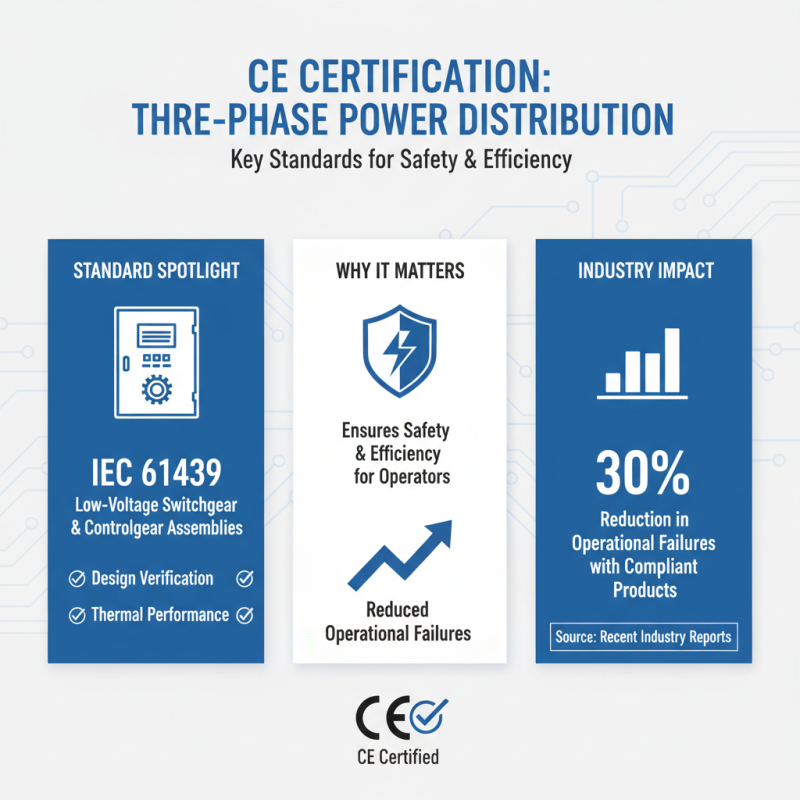
When selecting CE certification for three-phase power distribution systems, understanding key CE standards is crucial. These standards ensure safety and efficiency, which are paramount for operators. IEC 61439 is one significant standard, covering low-voltage switchgear and controlgear assemblies. It emphasizes the importance of design verification and thermal performance. According to recent industry reports, compliant products reduce operational failures by up to 30%.
Another important standard is EN 60204-1, which focuses on the safety of machinery. It specifies requirements for the electrical equipment of machines. Adhering to this standard not only protects personnel but also minimizes downtime due to electrical faults. Data shows that companies meeting this standard have experienced a 25% decrease in accidents related to electrical failures.
However, many companies overlook these standards. They assume compliance is too complex or costly. This can lead to significant risks in operation. Inadequate consideration of CE standards often results in costly fines or operational disruptions. Reflecting on current practices and investing time in understanding CE requirements can yield long-term benefits for three-phase power distribution companies.
When selecting the best CE certification for a 3 phase Power Distribution company, compliance requirements are crucial. Start by identifying the specific standards relevant to power distribution. This can range from electrical safety to electromagnetic compatibility. Understanding these standards is vital for ensuring products meet regulatory demands.
Documentation plays a significant role in the compliance process. Companies must prepare technical files. These files should include test reports and user manuals. Gathering inaccurate or incomplete documentation can lead to delays. It is essential to have detailed records that clearly demonstrate compliance. Some companies overlook this step, which can hinder certification.
Consulting with experts can be valuable, but reliance on external help could create gaps in understanding. Ensure your team reviews compliance regulations thoroughly. Regular audits of your processes can also highlight areas needing improvement. Ignoring these details may lead to non-compliance risks and financial losses. Each step you take in the CE certification process contributes to your reputation in power distribution.
| Compliance Requirement | Description | Applicable Standards | Documentation Needed |
|---|---|---|---|
| Low Voltage Directive (LVD) | Covers electrical equipment designed for use with a voltage between 50 and 1000 V AC or between 75 and 1500 V DC. | EN 60204-1, EN 61010-1 | Technical File, Risk Assessment Report |
| Electromagnetic Compatibility (EMC) | Ensures that electrical equipment does not generate, or is not affected by, electromagnetic interference. | EN 55032, EN 61000-3-2 | Test Reports, EMC Compliance Declaration |
| Machinery Directive | Concerned with ensuring safety and health standards for machinery. | EN ISO 12100, EN 60204-1 | Risk Assessment, User Manual |
| Pressure Equipment Directive (PED) | Regulates the design and construction of pressure equipment to ensure safety. | EN 13445, EN 13480 | Technical Documentation, Inspection Certificates |
| RoHS Compliance | Ensures that electrical and electronic devices do not contain high levels of hazardous substances. | EN 50581 | Material Declarations, Test Reports |
When selecting a certification body for CE compliance in the three-phase power distribution sector, thorough evaluation is critical. The chosen body must be recognized and accredited. A recent industry report indicates that nearly 40% of companies face challenges in choosing the right accreditor. This emphasizes the need for diligence.
Experience and expertise are essential. Certification bodies should have a proven track record in energy distribution. Many firms overlook the importance of industry-specific accreditations. Such details matter. According to a survey, 60% of companies with relevant certifications report improved operational efficiency. This highlights certification's tangible value.
Communication with the certifying body is key. Companies should assess how responsive and supportive they are. Promises of quick turnaround times can be misleading. Some firms found their certification processes more time-consuming than anticipated. These experiences underscore the significance of setting realistic expectations. A well-informed choice can enhance not just compliance but overall business performance.
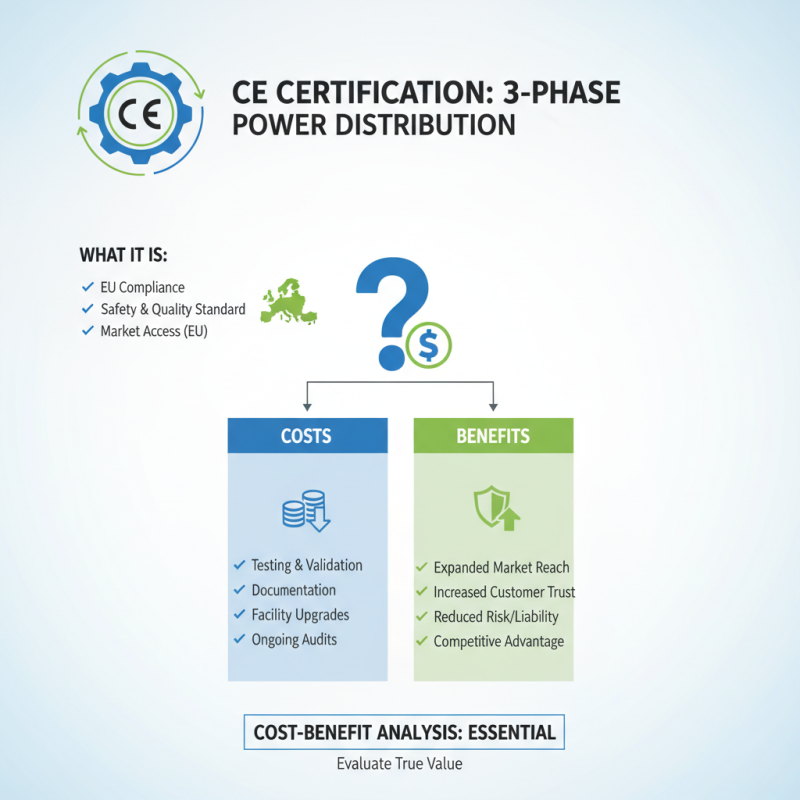
CE certification is vital for any 3-phase power distribution company. It signals compliance with European Union standards. However, obtaining this certification involves costs that can be daunting. A cost-benefit analysis is essential to evaluate its true value.
Tips: Assess your current operations. Identify compliance gaps. This analysis can prevent overspending on unnecessary certifications.
The financial outlay for CE certification can be significant. Consider application fees, testing costs, and ongoing compliance expenses. Yet, the benefits often outweigh these costs. These include enhanced market access and improved consumer trust. A well-analyzed investment can lead to higher profits in the long term.
Tips: Engage with industry experts. They can provide insights into potential pitfalls and guide you through the process efficiently. Actively seek feedback during your evaluation. This can refine your approach and increase the chances of successful certification.
Obtaining CE certification for electrical equipment can be challenging. Companies in Electric Power Distribution often face hurdles in meeting stringent requirements. Different standards and directives can create confusion. Each country may have its interpretation of these regulations, leading to inconsistencies in compliance.
Documentation is another major obstacle. Preparing the necessary technical files and reports takes time and expertise. Many companies underestimate the effort involved. Missteps in documentation can lead to delays in the certification process. This can be discouraging for businesses trying to expand in the European market.
Testing procedures present their own issues. Testing facilities may be limited, and waiting for results can be frustrating. If products fail initial tests, companies must reevaluate their designs. This iterative process requires patience and often leads to unforeseen costs. The path to certification is not always straightforward, making reflection on the journey essential for success.
Maintaining compliance post-certification is vital for companies in the power distribution sector. It requires ongoing commitment and attention to detail. Regular audits can help identify areas for improvement. A thorough evaluation of existing systems is crucial. This might uncover gaps that need addressing.
Documentation should be updated regularly. Keeping records organized is essential. This includes maintenance logs, training certificates, and compliance reports. Training staff is also important. Employees must understand the regulations and their roles. Missed training sessions may result in compliance failures.
Adopting a proactive approach can prevent issues. Conducting risk assessments will highlight potential non-compliance areas. Collaborating with industry experts may provide valuable insights. Remember, continuous improvement is key. Neglecting this can lead to costly mistakes in the long run. Regularly review your Power Distribution Transformer systems. This practice fosters a culture of compliance and accountability.
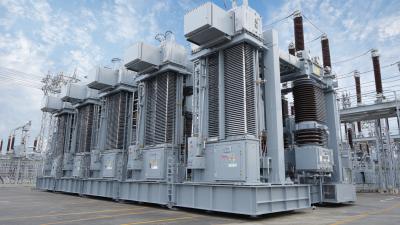
In the evolving landscape of the power sector, the role of custom Power Transformers has become increasingly vital. These transformers are engineered to efficiently handle the transmission and transformation of alternating current (AC) electricity between circuits at varying voltage levels, ultimately enhancing the efficiency and reliability of electrical systems. By optimizing the voltage, power transformers play a crucial role in ensuring consistent and safe power distribution across energy grids, industrial facilities, and commercial applications.
A data-driven analysis reveals that investing in tailored power transformer solutions can significantly improve operational performance. These transformers are designed to meet rigorous international standards, focusing on durability and high performance. Their engineering prioritizes not only efficiency but also safety and sustainability, which are essential for modern energy solutions. Custom power transformers thus contribute to reducing energy losses and improving the overall resilience of power networks, making them indispensable in today's electrical infrastructure. As power demands continue to grow, the strategic implementation of these solutions will become even more critical in enhancing the reliability and efficiency of power delivery systems.
: This product aims to enhance daily convenience and efficiency. It helps simplify various tasks at home or work.
Anyone seeking to improve their workspace, reduce clutter, or increase productivity can find it useful. Flexibility in use is key.
Setup is straightforward. Follow the included instructions carefully. A few simple steps get you started without hassle.
Regular cleaning is recommended to maintain functionality. Check for any wear and tear periodically.
Yes, it’s designed for versatility. It works well in various settings like home, office, or even outdoors under appropriate conditions.
If problems arise, consult the troubleshooting guide. Reaching out for support can also help clarify any uncertainties.
Yes, it's lightweight and compact. This feature makes it easy to store or transport wherever you need it.
Yes, it may not perform well in extreme conditions. Always consider the environment before use.
Durability varies based on usage. With proper care, it can last a significant time.
Adaptability is one of its strengths. Users should experiment with configurations for maximum benefit.
Choosing the best CE certification for a 3 Phase Power Distribution company is crucial for ensuring compliance and reliability in power systems. Understanding CE certification and its relevance involves recognizing key standards that govern 3 Phase Power Distribution systems, which help in meeting safety and performance criteria. Assessing the compliance requirements can pave the way for selecting the right certification body.
A thorough cost-benefit analysis highlights the financial implications of obtaining CE certification while addressing common challenges that may arise during the certification process. Additionally, maintaining compliance post-certification is vital for ongoing operations, necessitating the adoption of best practices within the power distribution sector. This comprehensive approach not only strengthens market position but also enhances trust with stakeholders and customers.